Foods That Lower Cortisol: What to Eat for Better Recovery
Lower cortisol naturally with these foods. Dark chocolate, fatty fish, fermented foods, and more to reduce stress and improve recovery.
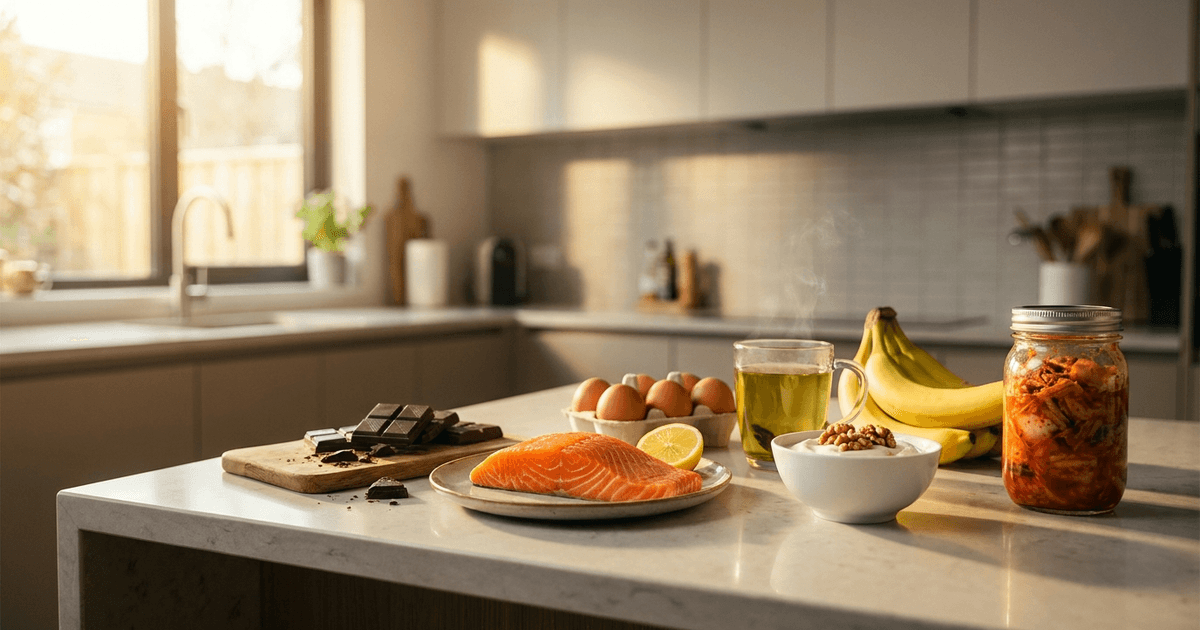

Foods that lower cortisol
You've been training hard for months. Sleep's decent, protein's dialed in, but you're stuck at the same weight on every lift. Your face looks puffier than it should. Belly fat won't budge even though you're in a deficit.
The problem might be cortisol.
Cortisol is your body's primary stress hormone. When it stays elevated, it breaks down muscle, stores fat around your midsection, and tanks your recovery. Chronic stress from work, poor sleep, and overtraining keeps cortisol high around the clock.
The good news: what you eat directly affects cortisol levels. Certain foods help bring it down. Here's what actually works.
Dark chocolate

Real dark chocolate (70% cacao or higher) contains flavonoids that reduce cortisol and adrenaline during stressful situations. A study in the Journal of Proteome Research found that eating 40 grams of dark chocolate daily for two weeks lowered cortisol levels significantly.
The key is actual dark chocolate. Milk chocolate has too much sugar and not enough cacao to move the needle. Look for bars with 70-85% cacao content.
Fatty fish

Salmon, mackerel, sardines, and other fatty fish are loaded with omega-3 fatty acids. Omega-3s reduce inflammation throughout your body and directly lower cortisol production.
A 2021 study found that omega-3 supplementation reduced cortisol levels by 19% during stressful situations. Whole fish works even better than supplements because you're getting protein and other nutrients alongside the omega-3s.
Aim for two to three servings of fatty fish per week. If you're not a fish person, a quality fish oil supplement gets you close.
Eggs
Eggs are one of the most nutrient-dense foods you can eat. The yolks contain choline, which your brain needs to regulate the stress response. They also have B vitamins that support adrenal function.
The protein and fat combination keeps blood sugar stable, preventing the cortisol spikes that come from blood sugar crashes. Three to four whole eggs in the morning sets you up for steady energy all day.
Bananas
Bananas are high in potassium and vitamin B6, both of which help regulate cortisol. Potassium also supports muscle function and hydration, making bananas a solid pre-workout choice.
The natural sugars in bananas provide quick energy without the crash you get from processed carbs. Pair them with protein or fat (like peanut butter) to slow digestion further.
Fermented foods

Your gut microbiome directly influences cortisol levels through the gut-brain axis. Fermented foods like yogurt, kefir, sauerkraut, and kimchi feed beneficial gut bacteria that help regulate stress hormones.
A 2022 study in Molecular Psychiatry found that people who ate fermented foods daily had lower perceived stress and reduced cortisol reactivity. The effect builds over time as your gut bacteria population improves.
Greek yogurt works double duty here: you get the probiotics plus 15-20 grams of protein per serving.
Green tea
Green tea contains L-theanine, an amino acid that promotes relaxation without drowsiness. L-theanine has been shown to reduce cortisol and lower heart rate during stressful tasks.
The caffeine in green tea is much lower than coffee, so you get alertness without the jittery cortisol spike. Two to three cups per day is the sweet spot for most people.
Whole grains
Oats, brown rice, quinoa, and other whole grains are complex carbohydrates that stabilize blood sugar. When blood sugar drops, cortisol rises to mobilize energy. Keeping blood sugar steady keeps cortisol in check.
Whole grains also increase serotonin production in the brain. Higher serotonin means lower cortisol and better mood overall.
Nuts and seeds
Almonds, walnuts, pumpkin seeds, and sunflower seeds contain magnesium, zinc, and B vitamins that support healthy cortisol levels. Magnesium deficiency is common in athletes and directly contributes to elevated cortisol.
A handful of mixed nuts as a snack gives you healthy fats, protein, and these key minerals. Walnuts specifically contain omega-3s, making them one of the best options.
What to avoid
Some foods actively raise cortisol:
- Refined sugar causes blood sugar spikes and crashes that trigger cortisol release
- Alcohol disrupts sleep and increases cortisol for up to 24 hours after drinking
- Excessive caffeine (more than 400mg daily) keeps cortisol elevated
- Fried foods increase inflammation, which raises cortisol
- Highly processed foods combine sugar, unhealthy fats, and inflammatory ingredients
You don't need to be perfect. An occasional drink or dessert won't wreck your progress. The issue is when these become daily habits.
Putting it together

Here's what a cortisol-friendly day of eating looks like:
Breakfast: Three eggs scrambled with spinach, slice of whole grain toast, green tea
Snack: Greek yogurt with a handful of walnuts
Lunch: Salmon with brown rice and vegetables
Snack: Banana with almond butter
Dinner: Chicken with quinoa, side of sauerkraut or kimchi
Evening: Small piece of dark chocolate
This isn't a rigid meal plan. The point is hitting the key foods (fatty fish, eggs, fermented foods, whole grains, nuts) consistently throughout the week.
The bigger picture
Food alone won't fix chronically high cortisol. You also need:
- Seven to nine hours of sleep
- Training volume your body can actually recover from
- Stress management (meditation, walks, whatever works for you)
- Adequate rest days
But nutrition is one lever you control completely. Eating to support healthy cortisol levels costs nothing extra and makes everything else work better: your training, your recovery, your body composition, your mood.
Start with one or two swaps. Add fatty fish twice a week. Replace your afternoon snack with yogurt and nuts. Drink green tea instead of your third coffee.
Small changes compound. A month from now, you'll notice the difference.