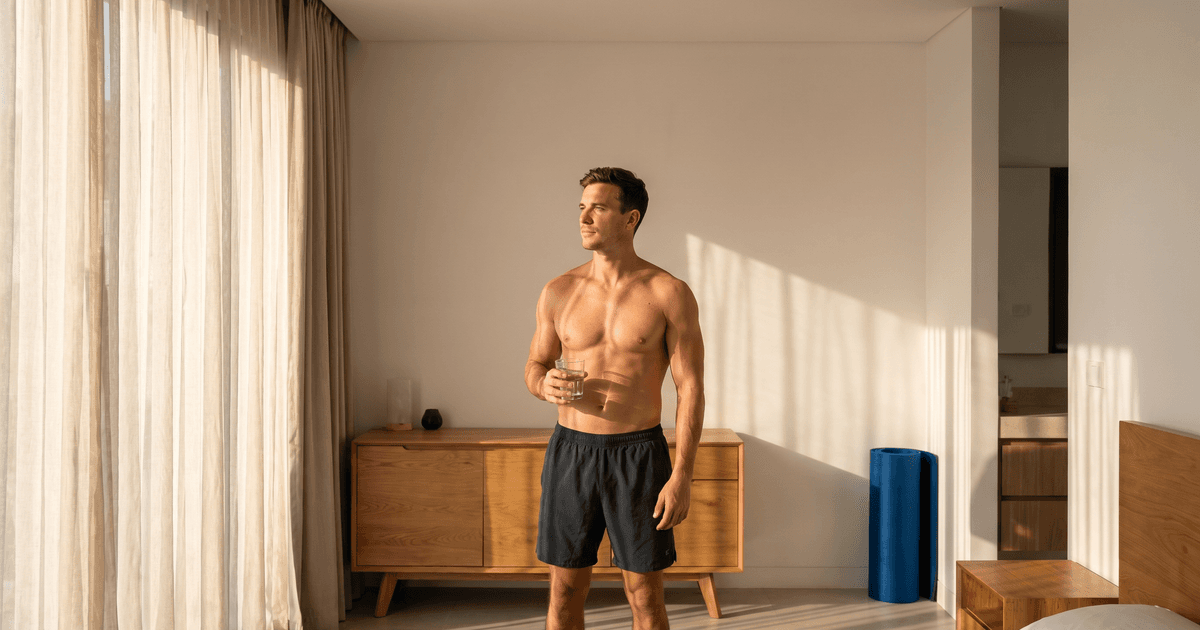

You finish a "cardio day," soaked, gassed, heart still hammering twenty minutes later, and you feel like you earned something. Sometimes you did. Most of the time you just cooked yourself for no reason.
Zone 2 cardio is the opposite of that. It's the slow, boring, conversational-pace work that builds the engine underneath everything else you do in the gym. And it's the one thing most guys chasing a physique skip entirely, because it doesn't feel hard enough to count.
What zone 2 actually is
Your training intensity splits into rough zones based on effort and heart rate. Zone 2 is the second-lowest: roughly 60 to 70% of your max heart rate, an easy aerobic pace you could hold for an hour without wanting to die.
The technical definition is about lactate. When you exercise, your muscles produce lactate as a byproduct of burning fuel. At low intensity your body clears it as fast as it makes it, so blood levels stay flat, usually under 2 mmol/L. That's Zone 2. Push harder and lactate starts piling up faster than you can clear it. That's the ceiling you're trying to stay under.
At this pace your body runs mostly on fat instead of stored carbs. That's the whole point. You're training the aerobic, fat-burning side of your metabolism, the part that powers everything from a long run to your recovery between heavy sets.
The talk test beats a heart rate monitor

You don't need a chest strap to find Zone 2. Use the talk test: you should be able to hold a full conversation, complete sentences, no gasping between words. If you can talk but couldn't comfortably sing, you're in the zone. The second you're clipping sentences short to breathe, you've drifted into Zone 3 and you're going too hard.
This matters because "too hard" is the default failure mode. The whole benefit of Zone 2 comes from staying easy. Most people can't stand how slow it feels and creep the pace up until they're in a gray no-man's-land: too hard to build an aerobic base, too easy to build real top-end fitness.
Heart rate math is a decent backup. A common estimate is 220 minus your age for max, then 60 to 70% of that. For a 25-year-old that's roughly 117 to 137 bpm. Treat it as a starting point. The formula is wildly variable between individuals, so if your body says "easy" but the watch says otherwise, trust your breathing.
Why base-building matters when you lift
Here's the part that sells it for the gym crowd. A bigger aerobic base makes you recover faster.
Your ability to clear waste products, resupply oxygen, and refill energy between sets runs on your aerobic system. Build that engine and your rest periods get more productive. You come back to the bar fresher on set four. Your work capacity across a whole session goes up.
It also builds mitochondria, the little power plants inside your cells that turn fuel into usable energy. More of them, working better, means a more efficient metabolism. Worth being honest here: this is where Zone 2's reputation runs ahead of the evidence. A recent narrative review found the mitochondrial and cardio-fitness gains from higher-intensity work are often larger than from Zone 2 alone. Intervals do move the needle harder on raw fitness.
So why bother with the slow stuff? Because it costs you almost nothing to recover from. You can stack three or four Zone 2 sessions a week on top of heavy lifting without digging a fatigue hole. Try that with all-out intervals and you'll be fried by Thursday.
The cortisol angle

Every hard session spikes cortisol, your main stress hormone. That's fine, even useful, in the right dose. The problem is chronic overload: too many high-intensity sessions, not enough sleep, and cortisol stays elevated. Recovery stalls, sleep gets worse, and your bench goes backward.
Zone 2 is aerobic work that barely touches that stress response. Keeping the effort low and lactate low means the session doesn't trigger the same cortisol dump a brutal HIIT circuit does. You get cardiovascular benefit, fat oxidation, and a bigger aerobic base without adding to the stress bucket you're already filling with heavy training and a desk job.
That's the real pitch. Zone 2 is fitness you can do a lot of, because it doesn't take much out of you.
How to actually program it

Start with three or four sessions a week, 30 to 60 minutes each. If you're new to it, start at 20 to 30 minutes and build up.
Pick something you can hold at a steady, boring pace: incline treadmill walking, easy cycling, a rower kept light, the stairmaster at a pace you'd never brag about. Running works if your easy pace actually stays easy; for a lot of people even a slow jog pushes them out of Zone 2, so walking an incline is more honest.
Slot it where it won't wreck your lifting. Zone 2 on rest days, or after your lifting session rather than before, keeps your strength work fresh. Because the fatigue cost is so low, you have room to be flexible.
The hard part isn't the workout. It's the ego. You'll watch someone next to you drenched and gasping and feel like you're not working. Let them cook themselves. You're building the engine, and it works whether or not anyone's impressed by how easy it looks.